
Vase.ai Consumer Insights | As heard on BFM 89.9 Marketing Mojo | Malaysia | October 2026
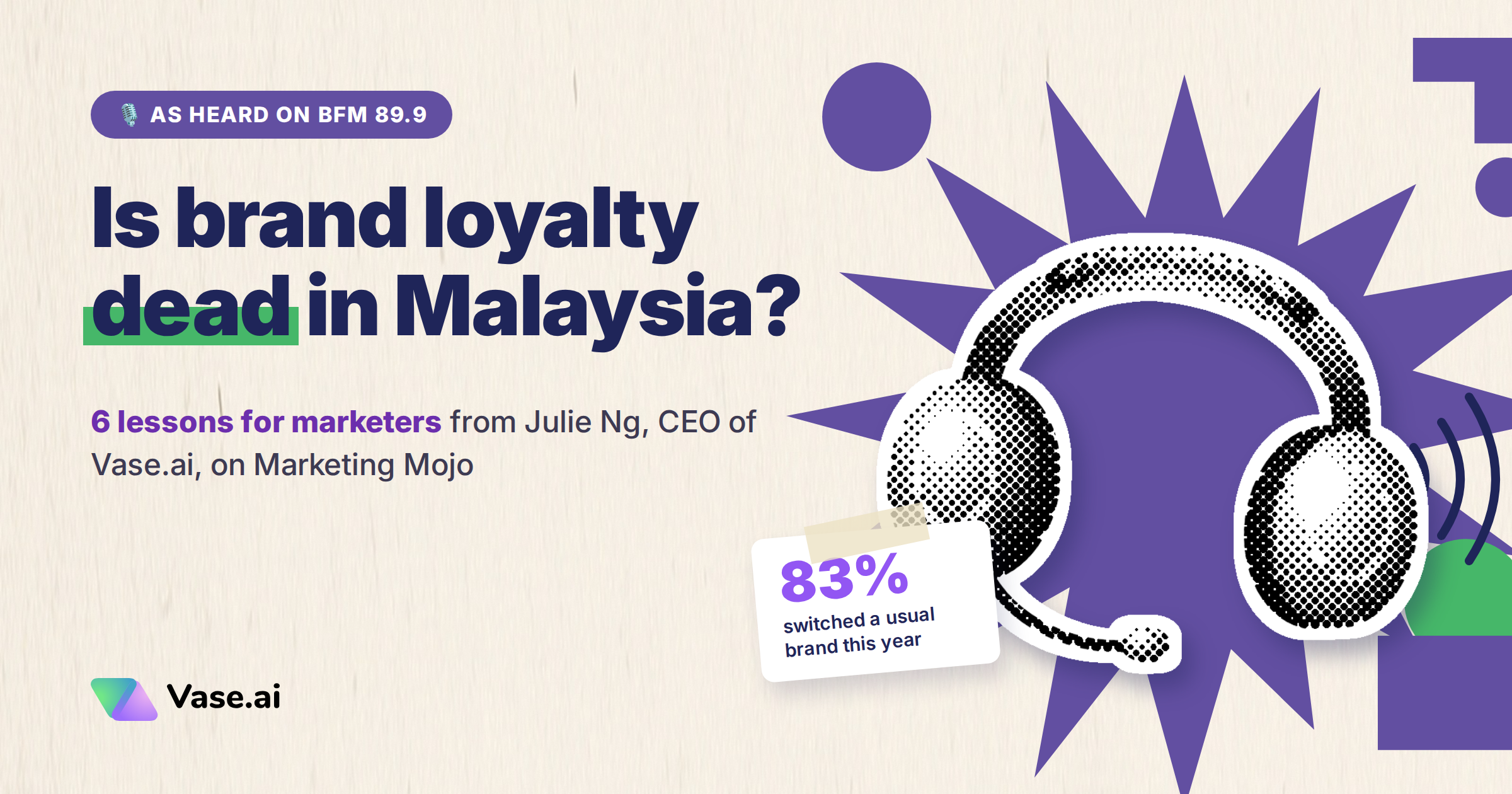
Is brand loyalty dead in Malaysia? 83% of Malaysian shoppers switched a usual brand this year. Most marketers would blame rising prices. Only 12% did. Our CEO Julie Ng joined Richard Bradbury on BFM 89.9 to unpack what is really happening to brand loyalty, and what makes Malaysians switch.

Julie walked through findings from our FMCG Brand Switching Report 2026 and other Vase.ai studies. Here is what that means for your brand, and what to rethink for 2027.
In this article
- 🎧 Listen to the episode
- Loyalty was always shared, not single
- Fortress or playground: know your category
- Price opens the door, promotion walks them through
- AI is the new shelf, but reviews close the sale
- National averages will mislead your media plan
- Sale season and loved ads: two traps
- What to rethink for 2027
|
83.3%
🔄 switched brands in at least 1 grocery category since January 2026
|
49.6%
🏷️ tried a new brand because of a promotion
|
11.9%
💸 tried a new brand because their usual one got too expensive
|
90%+
💼 of RM8,001+ households switched, slightly above lower incomes
|
Base: 486 Malaysian grocery decision-makers, 2026. Source: FMCG Brand Switching Report 2026.
Loyalty was always shared, not single
Short answer: only 16.7% of shoppers made no brand change at all this year. Most rotate between a few brands rather than abandoning one for good.
This isn't new. Research from the Ehrenberg-Bass Institute, the team behind How Brands Grow, has long shown that most of your buyers also buy your competitors. Switching rarely means leaving either: in bread, 94.3% of switchers have gone back to their original brand or buy both.
Julie Ng, Co-Founder & CEO, Vase.ai
Fortress or playground: know your category
Short answer: switching isn't even. Personal care leads at 53.1%, while bread sits at 23.0%.
Changed their usual brand since January 2026, by category (N=486):
12 of the 20 categories in the study shown. Bar widths relative to the highest category. Source: FMCG Brand Switching Report 2026.
| 🏰 Fortress | 🎡 Playground | |
|---|---|---|
| Examples | Baby care, anything where a wrong pick is costly | Snacks, sauces, coffee |
| Why people switch | They mostly don't. Switching feels risky | Trying something new is the fun part |
| How to win | Protect trust and consistency | Keep giving them something new |
Mister Potato's limited-run Chinese New Year flavours, on shelf for two months, are a playground play done right. You will never see a limited-edition diaper. Work out which game you're in before you copy anyone's playbook.
Price opens the door, promotion walks them through
Short answer: when asked why they switched, 51.6% said better value for money. But only 11.9% tried a new brand because their usual one got too expensive. Promotions, curiosity and social media triggered most trial.
What made shoppers try a new brand since January 2026 (N=486):
Multiple answers allowed. 11.5% tried no new brand. Source: FMCG Brand Switching Report 2026.
Julie Ng
It isn't about affordability either. Switching runs from 79% to 91% across income groups, and households earning RM8,001 and above switch slightly more. Shoppers are trading around, not down: premium coffee, budget tissue, same person.
AI is the new shelf, but reviews close the sale
Short answer: AI helps shoppers narrow the shortlist, but people still make the final call, and reviews from people they trust tip the decision.
On air, Julie shared that close to 4 in 10 Malaysians now use an AI assistant when researching products. The catch: AI answers lean on what other people say about you, such as reviews, comparison lists, forums and third-party articles. Publishing your own content is no longer enough.
Julie Ng
Don't ditch search yet, good SEO feeds AI answers too. The cheapest next step, especially for SMEs: ask every buyer for one specific line of review. "Good with rice. Spicy enough." Done consistently, it compounds.
National averages will mislead your media plan
Short answer: TikTok is Malaysia's top brand discovery platform at 64%. But for Gen X, Facebook is almost level, and for Gen Z it doesn't make the top three.
| Generation | Where they first discover brands (top 3) |
|---|---|
| Gen Z | TikTok 72% · Instagram 55% · YouTube 35% |
| Millennials | TikTok 64% · Facebook 58% · YouTube 45% |
| Gen X | TikTok 58% · Facebook 56% · YouTube 37% |
Source: Media Consumption Across Generations report and its generation cuts, N=962, 2025.
The same goes for search. 31% of Gen X still discover brands through search engines, so dropping search for an older audience would cost you reach.
🎧 Julie went deeper on brand discovery in an earlier Marketing Mojo episode: Date on TikTok, Marry on Instagram? Brand Discovery in 2026
Julie Ng
Sale season and loved ads: two traps
Short answer: 94% of Malaysians wait for Double-Digit Sales at least sometimes. And even PETRONAS, Raya's most-recalled advertiser, was correctly linked to its own ad by fewer than half of viewers.
|
94%
🛍️ wait for Double-Digit Sales like 11.11 at least sometimes (37% usually)
|
22%
🌙 named PETRONAS unprompted as a Raya advertiser, the highest of any brand
|
49%
🔗 correctly linked PETRONAS' Raya ad to PETRONAS
|
Sources: Double-Digit Sales & Payday study (N=416, 2025); Post-Raya 2026 Advertising Analysis (N=420, 2026).
Brands can't opt out of sale season, but price can't be the only reason people buy you. The good news: 39% respond to limited-time exclusives, so urgency doesn't have to mean a deeper discount.
Use limited editions, exclusives and collectibles to create urgency without cutting margin. And before any big campaign airs, cover the logo. Would people still know it's you?
What to rethink for 2027
Switching is fine as long as you stay in the rotation. Stop chasing exclusivity.
Find out which brands your buyers pick up alongside yours, then run joint promotions. Sambal brand, meet the crackers.
Know who your best customers are and where they actually discover brands, not the national average.
Ask AI assistants about your category. If you're missing, earn your way in with reviews and third-party coverage.
Brand switching is 1 of the 14 decisions in our Brand Plan Compass. See which research tells you why buyers leave and how to win them back, before your 2027 plan locks.
Find your decision →FAQ
Is brand loyalty declining in Malaysia?
Brand loyalty in Malaysia is shared rather than dead. 83.3% of Malaysian grocery shoppers switched brands in at least one category since January 2026, and only 16.7% made no change. But most switchers still go back to their old brand at least occasionally.
Why do Malaysians switch brands?
Better value for money (51.6%) and better quality (44.7%) are the top reasons. Trial is mostly triggered by promotions (49.6%), curiosity (37.0%) and social media (34.6%). Only 11.9% tried a new brand because their usual one got too expensive.
Which grocery categories do Malaysians switch the most?
Personal care leads at 53.1%, followed by snacks, biscuits and chocolate (35.8%). Bread and bakery has the lowest switching rate measured, at 23.0%.
Do Malaysians wait for 11.11 and 12.12 sales to buy?
Yes. 94% wait for Double-Digit Sales at least sometimes, and 37% usually do. Only 6% shop any time.