
Quick answer: Yes, but treat an early read as a quality check and a preview, not a result. Looking at data while fieldwork runs helps you catch problems and give leadership a sense of direction. Early responders can differ from later ones and quotas may not be filled yet, so label anything you share as preliminary and wait for the full sample before making decisions.
Teams often want to see results before a survey closes. Management wants an update, a launch meeting is coming up, or the team simply wants reassurance that the study is on track. Live dashboards make this easy. The question is how much weight to put on what you see.
Why is an early read useful?
- Catching problems early. A confusing question, a broken skip or a screener that terminates too many people shows up in the first responses.
- Checking quality. You can read early open-ended answers to confirm people understand the questions.
- Managing stakeholders. A clearly labelled preview keeps leadership engaged while fieldwork finishes.
- Planning analysis. Early patterns help you decide which cuts and comparisons to prepare.
Why can early results be misleading?
| Risk | What happens | How to manage it |
|---|---|---|
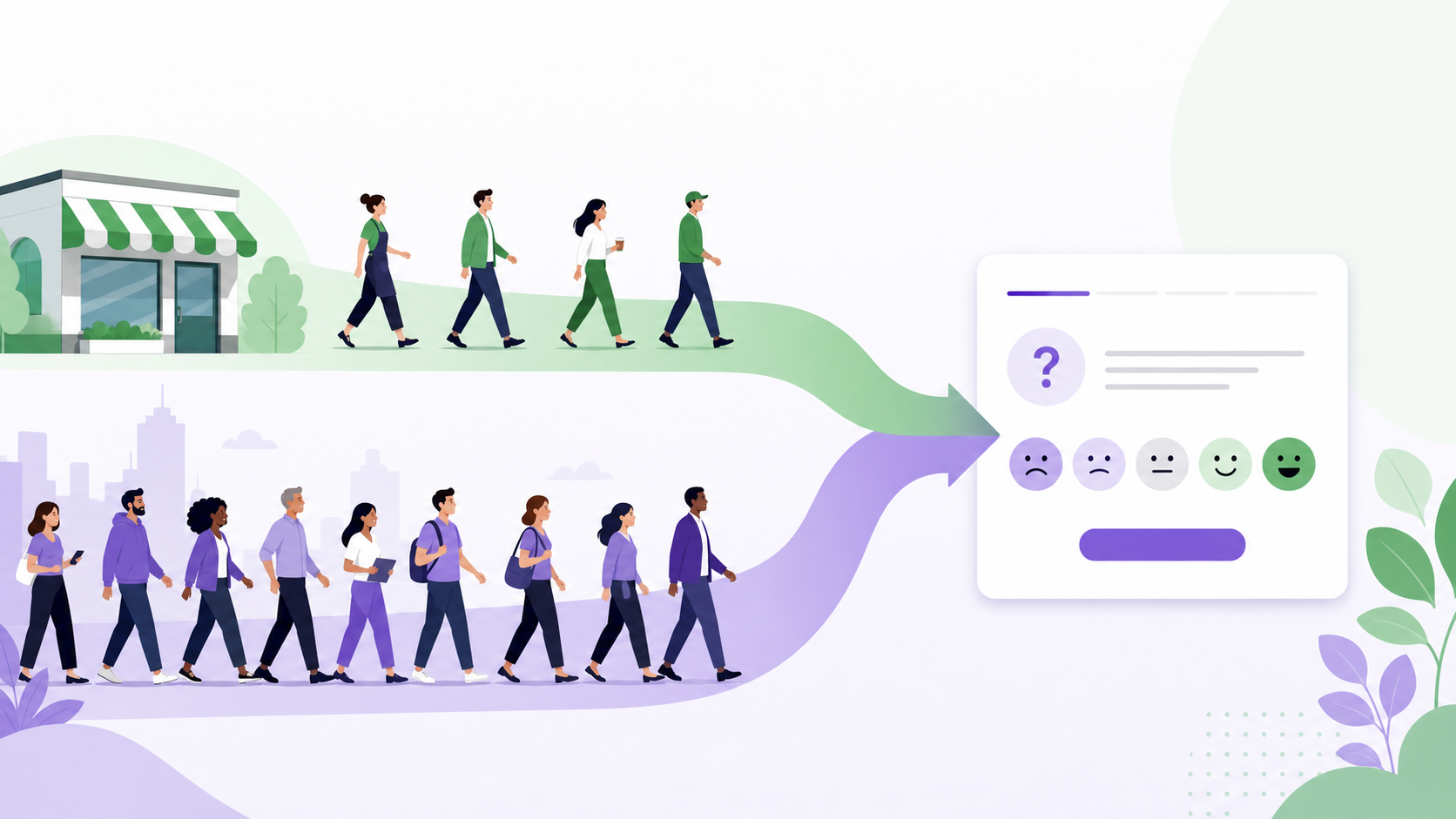
| Early responders differ | People who answer first can be more engaged or more available than those who answer later | Compare early and final results before drawing conclusions |
| Quotas not yet filled | Some age groups or regions fill faster, so the early mix is unbalanced | Check quota progress before reading totals |
| Small bases | Segment results swing widely on few respondents | Avoid reading segments until bases are large enough |
| Confirmation bias | Teams anchor on the first number they see | Label everything preliminary and avoid sharing single numbers |
How do you take an early read safely?
- Run a soft launch. Field a small first batch, check termination rates, timing and open-ends, then release the rest.
- Check quota progress first. Know which groups are under-filled before you look at any totals.
- Focus on direction, not numbers. Share patterns such as "Concept B is ahead so far" rather than precise figures.
- Label it clearly. Mark every interim chart as preliminary, with the number of responses so far.
- Do not change the questionnaire mid-field unless you find a genuine error. Changes split your data into two versions.
- Compare at the end. When fieldwork closes, check whether the final result moved from the early read, and say so.
If something in the early data looks wrong rather than surprising, check quality before anything else. Our guide on checking whether online survey data is clean enough to trust lists what to look for.
What does this look like in practice?
Imagine a team testing three new flavour variants ahead of a leadership meeting. The meeting falls two days before fieldwork closes. The team shares a one-page preview: Variant A leads among early respondents, older age groups are still filling, and the final result will follow. Leadership gets a sense of direction without the team committing to a number.
When fieldwork closes, Variant A still leads, but its margin over Variant B narrows once older respondents are fully included. Because the preview was labelled clearly, the change is easy to explain, and the decision is based on the complete data rather than the early read.
What should an interim update to leadership look like?
Keep it to one page. Show the number of responses so far against the target, which groups are still filling, and two or three directional observations. Avoid percentages to one decimal place, ranked tables and segment splits, which all look more final than they are. End with the date the full results will arrive and what decision they will inform.
It also helps to agree in advance what an interim read can and cannot be used for. For example, the team might agree that an early read can confirm the survey is working and show broad direction, but that no launch, budget or media decision will be made until the full sample is in. Writing that down before fieldwork protects everyone when the early numbers look exciting.
Finally, keep a record of the interim view. When the final results arrive, a quick comparison shows how much early data moved in your category and audience. Over a few studies, that record tells you how far you can trust an early read next time, which makes future interim updates more useful and less nerve-racking.
When should you not look early?
- When the study is a tracker wave and early numbers might be compared with last wave’s final results.
- When the audience is niche and quotas will fill slowly, so early data mostly reflects the easiest groups.
- When stakeholders are likely to act on the first number they see, whatever the label says.
In those cases, a quality check without results is the safer option: confirm that responses look sensible and quotas are progressing, and keep the numbers back until fieldwork closes.
For niche audiences in particular, slow quota filling is normal. Our guide on stacking quotas in a Malaysia survey explains why some groups always arrive last.
Where does Vase.ai fit?
We build Vase.ai with a real-time dashboard, so teams can watch responses arrive from a verified panel of Southeast Asian consumers as fieldwork runs, with AI-validated responses and a full read once fieldwork closes.
If an early read is part of your plan, our guide on telling whether a survey difference is real is worth reading first, because it explains why a lead that looks clear on a small early sample can shrink once the full sample is in.
Frequently asked questions
Is it safe to share interim survey results with management?
Yes, if they are clearly labelled as preliminary, show how many responses are in, and focus on direction rather than precise figures.
Can I change a survey question after fieldwork starts?
Only to fix a genuine error. Changing questions mid-field splits your data into two versions that cannot be combined cleanly.
Why do early survey responses differ from final results?
Early responders can be more engaged or available, and quotas may not be filled evenly yet, so the early mix does not match the final sample.