
Quick answer: Often, yes, there is more to find. Most surveys can answer more questions than the first report covered, through deeper segment cuts, profiles of key groups such as lapsed buyers, and a closer read of open-ended answers. Before commissioning new fieldwork, list the open questions and check which ones existing data can answer. Commission new research only for what was never asked, or where the base is too small to read.
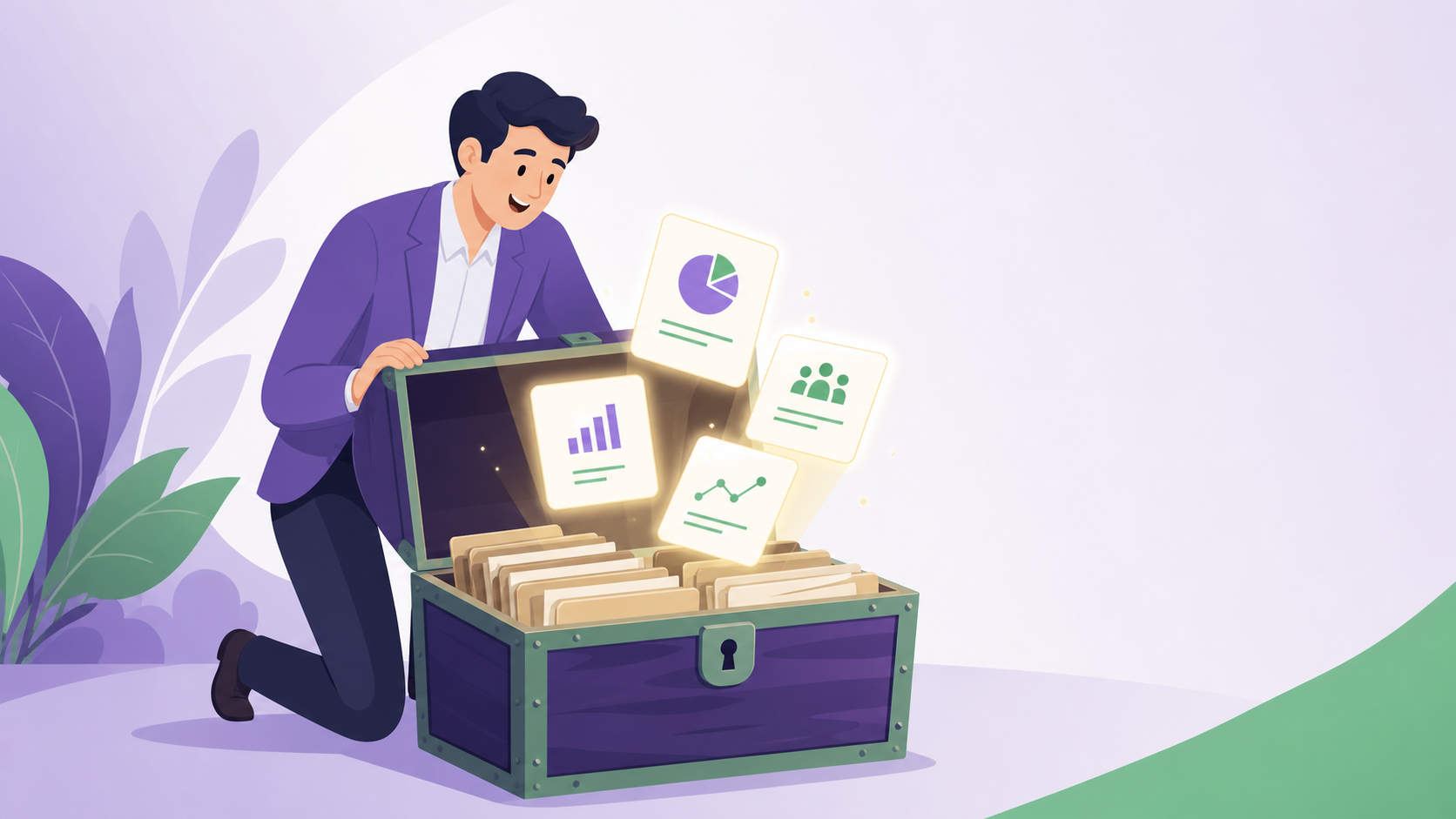
When a report raises new questions, the natural reaction is to plan another study. Sometimes that is right. But most surveys contain answers that the first report never surfaced, because the report focused on headline findings. Going back to the data first is usually faster and cheaper, and it sharpens any new study you do commission.
What can existing survey data usually still answer?
| Type of analysis | What it can reveal | Example question |
|---|---|---|
| Deeper segment cuts | Differences by ethnicity, age, region, income or household type | Do younger buyers see the brand differently from older ones? |
| Group profiles | Who sits in a key group, such as lapsed or non-buyers | What do people who stopped buying have in common? |
| Cross-question links | How attitudes relate to behaviour | Do people who rate taste highly buy more often? |
| Open-ended answers | Reasons, language and ideas not captured in closed questions | How do people describe the brand in their own words? |
| Competitor views | How rival brands perform among their own users | Why do users of the market leader stay loyal? |
How do you decide what existing data can answer?
- List the open questions raised by the report, in plain language.
- Map each one to the questionnaire. Was there a question that touches it directly or indirectly?
- Check the base. Is the group large enough to read? Our guide on telling whether a survey difference is real helps here.
- Run the cuts and check significance before interpreting differences.
- Mark the gaps. Anything not asked, or with too few respondents, becomes the brief for new research.
This mapping exercise usually takes an afternoon. It often shows that half the open questions can be answered from data you already own, and that the rest can be covered by a much shorter new survey than first expected. It also gives you a clear, written reason for any new research you do request, which makes budget conversations easier.
When do you genuinely need new fieldwork?
- The question was never asked, such as a new competitor or a new product idea.
- The group you care about is too small in the existing sample to read reliably.
- Behaviour has likely changed since fieldwork, such as after a price change or a major launch.
- You need to understand motivations in depth that a survey cannot capture, which may call for a qualitative study with a specialist provider, followed by a quantitative check of how widely the findings hold.
What does this look like in practice?
Imagine a personal care brand whose brand health report shows flat purchasing in one region. The first instinct is a new study on that region. Instead, the team goes back to the data. Cutting by age shows the flat trend is concentrated among younger buyers. Profiling lapsed buyers in that group shows they moved to a competitor seen as better value. The open-ended answers mention pack sizes that are too large for trying something new.
Only one question remains unanswered: whether a smaller pack at the right value would bring those buyers back. That becomes a short, focused new study, instead of a broad one that would have repeated questions the team already had answers to.
Ethnic and regional cuts deserve particular care in Malaysia. Our guide on analysing survey results by ethnicity in Malaysia covers the common traps.
How do you organise a follow-up analysis?
Treat it like a small project with a brief. Write down each question, the decision it supports and the data you will use to answer it. Then agree how results will be shared: a short addendum to the original report is usually enough, rather than a new deck. That keeps the follow-up focused and stops it growing into a second full analysis.
Be strict about significance. Follow-up work often involves many cuts, and the more cuts you run, the more likely some differences appear by chance. Decide in advance which comparisons matter most, flag the rest as exploratory, and treat surprising findings on small bases as hypotheses to test rather than conclusions to act on.
Lastly, keep the original questionnaire and data easy to find. Teams often lose time simply locating the right file or remembering how a question was worded. A tidy archive of past studies, each with its questionnaire, audience and fieldwork dates, makes every future follow-up faster.
When a new study does go ahead, reuse the key questions from the earlier one wherever possible. Matching wording and scales let you compare the two directly, so the new research builds on what you already know rather than starting from zero.
Where does Vase.ai fit?
We build Vase.ai so teams can return to completed studies in a real-time dashboard, filter and compare segments, and read AI-validated responses from a verified panel of Southeast Asian consumers whenever new questions come up.
It is built for teams that want to get full value from every study and run short follow-ups when a gap appears, DIY or with our research experts. When a question needs in-depth qualitative work, specialist qualitative providers do that well, and a quantitative survey can then check how widely their findings hold.
Frequently asked questions
How long after fieldwork can survey data still be reanalysed?
As long as behaviour in the category has not changed much. For stable categories, data can stay useful for many months; after a major market change, treat it with more caution.
What is the most overlooked part of a survey dataset?
Open-ended answers. They are often summarised briefly in reports but contain reasons and language that closed questions miss.
When should I commission a new survey instead?
When the question was never asked, the group you need is too small in the existing sample, or behaviour has likely changed since fieldwork.