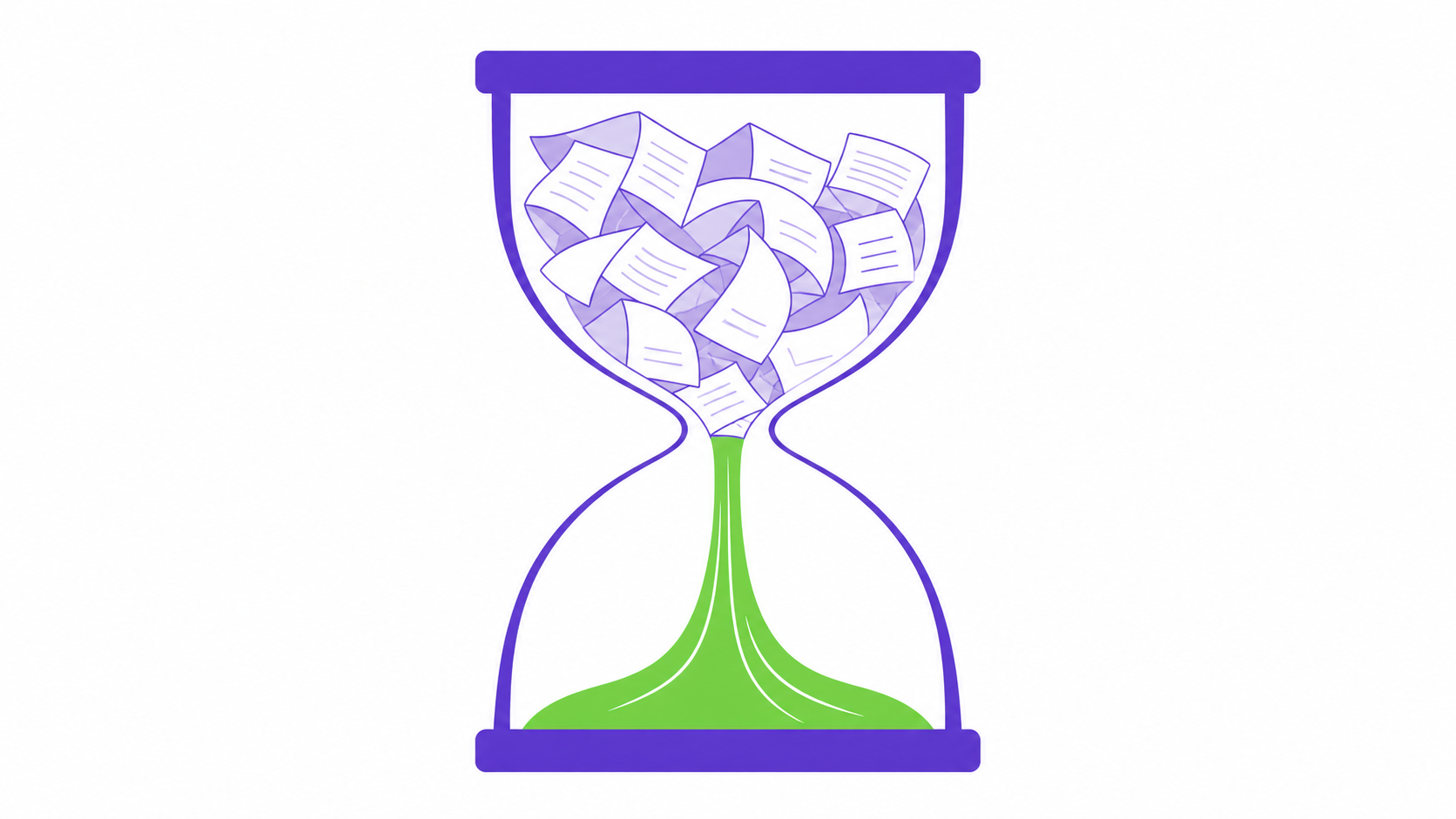
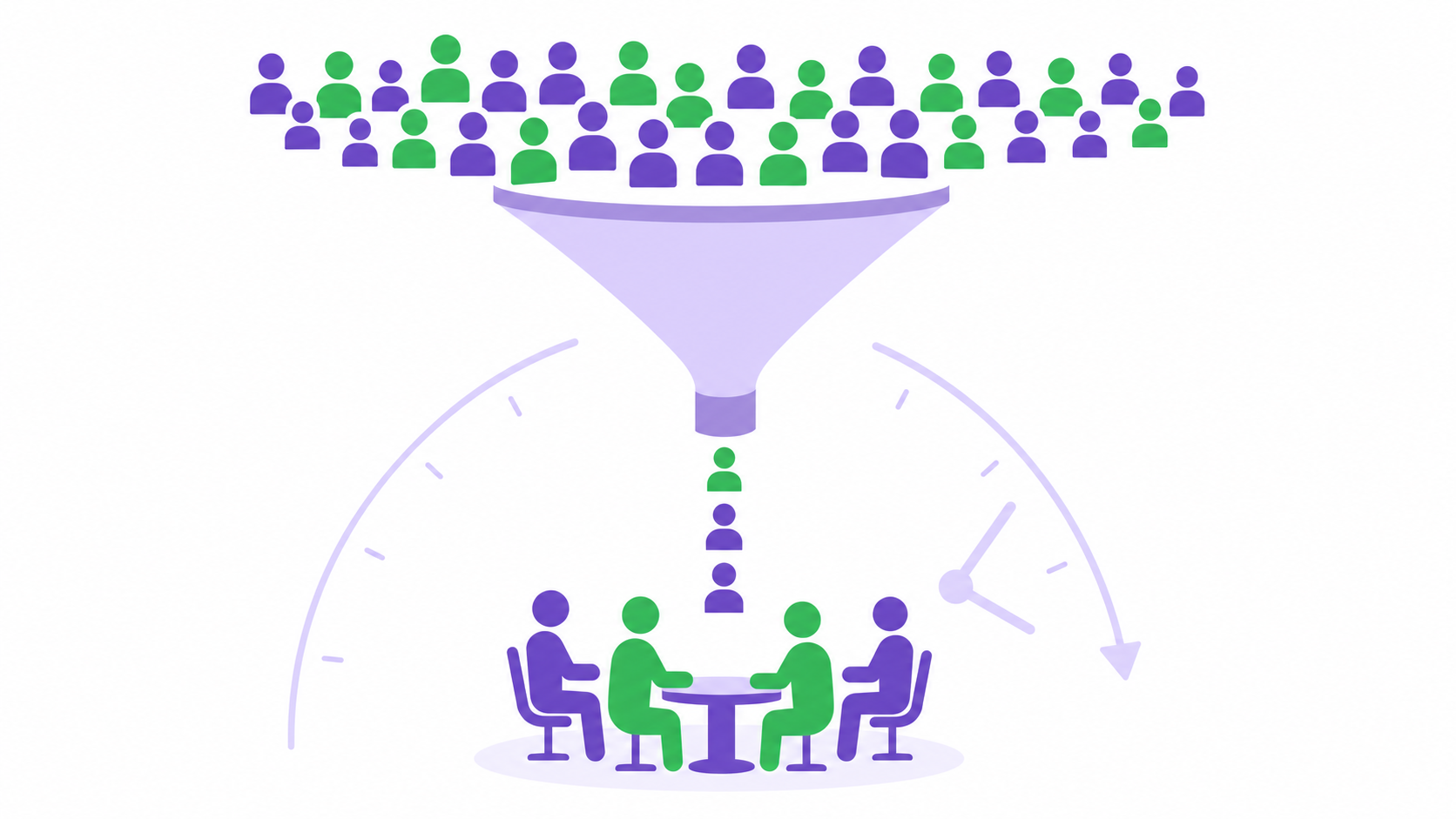

Qualitative research is slow for reasons that are mostly structural rather than avoidable: recruitment against a tight screener, scheduling real humans, moderator availability, transcription and the analysis itself. Recruitment and analysis are where the biggest recoverable delays sit. Fieldwork itself is rarely the problem, and compressing the analysis stage is the most common and most damaging shortcut.
Brand teams often arrive at qualitative research expecting a timeline similar to a survey and are surprised when eight weeks are quoted. The gap is not vendor padding. It is that qualitative involves scheduling and interpreting real people, and neither compresses the way sample collection does.
We build Vase.ai, and quantitative work is what our platform does. We are not going to argue qualitative is unnecessary, because for a lot of brand questions it is the only honest method. What follows is where the weeks go and which ones you can actually recover.
1. Recruitment against a narrow screener
This is the single biggest cause of delay and it scales badly. Finding twelve category users is quick. Finding twelve mothers of children under three who bought a specific brand in the past month and live in a defined area can take two to three weeks in a smaller market.
Every additional screener criterion multiplies incidence down. Before locking the screener, ask which criteria genuinely change what you will hear. Teams routinely add conditions that feel rigorous and simply make recruitment harder without changing the insight.
2. Scheduling humans
Focus groups require eight to ten people in one room at one time, which in practice means offering three slot options and over-recruiting for no-shows. Depth interviews are easier to schedule but multiply the moderator days.
Online qualitative removes travel time and widens the catchment, which genuinely helps. It does not remove the coordination overhead, and it introduces its own screening problem around connection quality and environment.
3. Moderator availability
Good moderators are booked weeks ahead, and in Southeast Asia the constraint tightens when you need a specific language plus category familiarity. A moderator who is fluent in Bahasa Indonesia and understands the personal care category is not always available in the window you want.
This is a hard constraint. The only real mitigation is to book the moderator before the brief is fully settled, which most procurement processes make awkward.
4. Transcription and translation
Automatic transcription has genuinely reduced this, from days to hours in English. Multi-language Southeast Asian work is less solved. Code-switching between English, Malay, Mandarin and dialect within a single sentence defeats most automatic systems, and human review is still required.
Budget real time here if you are working across Malaysia, Singapore or Indonesia. A transcript that reads cleanly but has quietly mistranslated a key phrase is worse than a slow one.
5. Analysis, which is where the value is
Qualitative analysis is genuinely slow because it is a person reading everything, finding patterns and testing them against contrary evidence. Ten depth interviews produce several hundred pages. Doing that properly takes a week and cannot be meaningfully automated yet.
AI summarisation helps with first-pass theme extraction and is worth using. It is not a substitute for a researcher who notices that three respondents said the same thing for opposite reasons, which is frequently the finding that matters.
6. Stakeholder debriefs that become a second project
Qualitative findings invite discussion in a way that a chart pack does not, which is a strength. It becomes a delay when each stakeholder group gets its own session and the recommendation shifts between them.
Run one debrief with everyone present. If that is politically impossible, write the recommendation first and present it unchanged to each group.
7. Using qualitative for a question quantitative should answer
This is the delay nobody counts. If the real question is which of four packs performs best, qualitative will give you rich, plausible, directional answers that do not settle it, and you will end up running a quantitative test afterwards anyway.
Qualitative is for understanding why and discovering what you did not know to ask. Quantitative is for sizing and choosing between options. Mixing them up costs more time than every scheduling problem combined.
How do the options compare on speed?
| Approach | Typical timeline | What it is good for | Main constraint |
|---|---|---|---|
| In-person focus groups | 6 to 8 weeks | Group dynamics, reaction to physical stimulus | Recruitment and venue scheduling |
| Online focus groups | 4 to 6 weeks | Multi-market reach, lower cost | Screen fatigue, connection quality |
| Depth interviews | 3 to 5 weeks | Sensitive topics, expert audiences | Moderator days |
| Online communities | 2 to 4 weeks setup, then ongoing | Longitudinal understanding | Participant drop-off |
| Open-ended quantitative | 1 to 3 days | Scale plus verbatim colour | Depth is shallower than true qualitative |
That last row is where we would put ourselves honestly. Vase.ai runs quantitative studies with open-ended questions across a verified panel of 3.6 million Southeast Asian consumers, with results in as little as 24 hours and AI-validated responses. Coded verbatims at scale are useful and fast, and they are not the same thing as a skilled moderator probing a contradiction in real time.
If your question needs genuine qualitative depth, use a qualitative specialist and accept the timeline. If it needs scale and a decision between options, a faster quantitative route will serve you better. Most brand teams need both across a year, and the mistake is using one where the other belongs.
Frequently asked questions
How long does qualitative research take in Southeast Asia?
Four to eight weeks is typical for focus groups, and three to five for depth interviews. Multi-market work adds time for language-matched moderators and translation review. Recruitment against a narrow screener is the stage most likely to overrun.
Can AI replace qualitative analysis?
Not yet, for the part that matters. AI is genuinely useful for transcription, translation support and first-pass theme extraction. Interpreting why respondents contradict themselves, and deciding which contradiction is meaningful, still needs a researcher.
How many respondents does qualitative research need?
Far fewer than people expect. Six to eight depth interviews per segment, or three to four focus groups, usually reaches the point where new themes stop appearing. Adding more participants adds cost and time without adding much insight, because qualitative is not measuring incidence.