
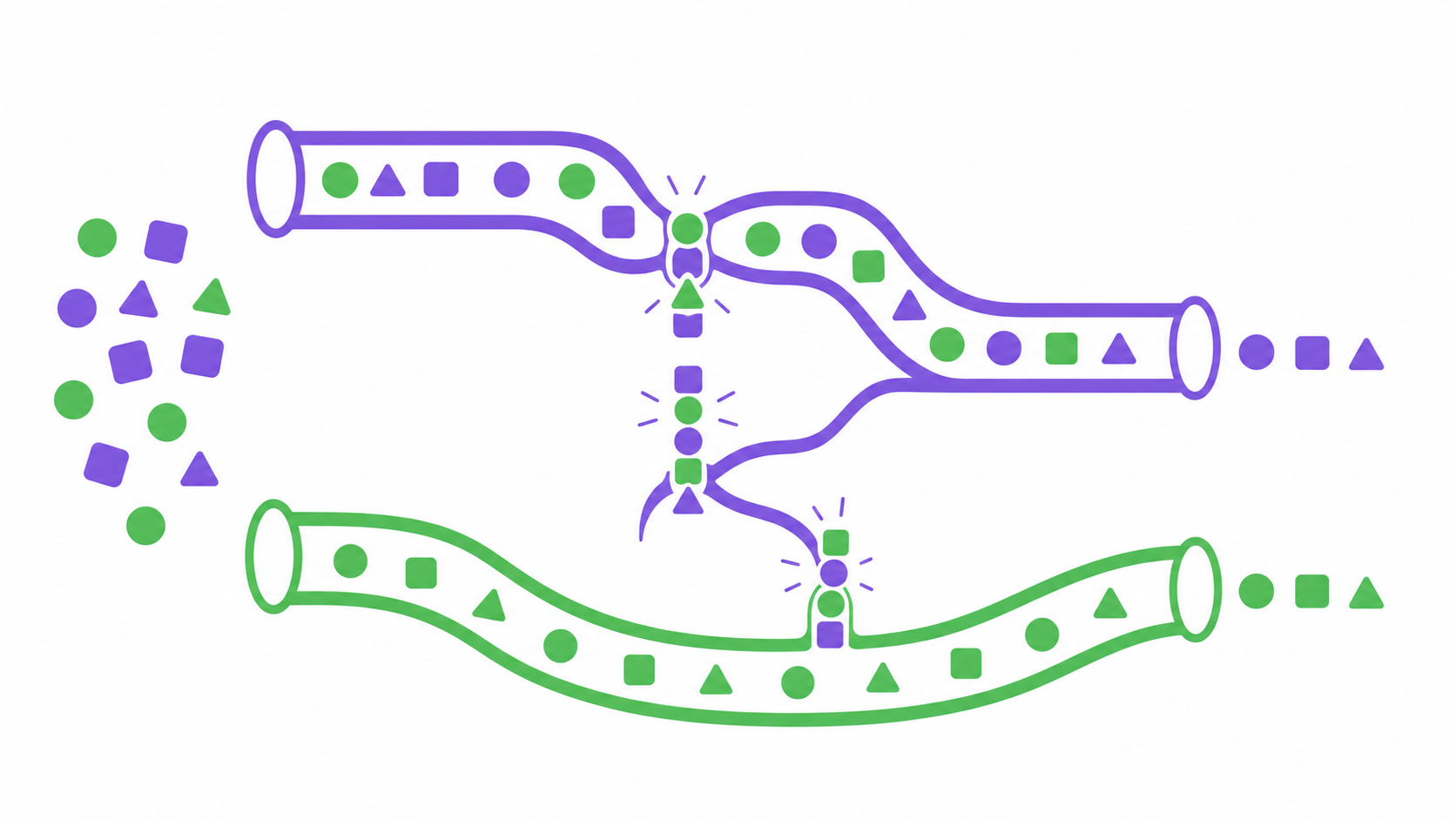

A traditional market research project rarely loses time in fieldwork. It loses it in seven other places: brief clarification, proposal and procurement, questionnaire sign-off, scripting and translation, sample sourcing, data processing, and report writing. Fieldwork itself is typically five to ten working days. Everything around it is what turns a study into a two-month project, and roughly half of that surrounding time is habit rather than necessity.
Where the weeks actually go
Ask a marketer why research takes so long and they will usually say fieldwork. Ask a research operations manager and you get a different answer. Fieldwork is the most predictable stage in the process and the one least likely to slip. The delays sit on either side of it, in the handoffs between people who are each waiting on someone else.
This matters because the standard fix, pushing the vendor to field faster, targets the one stage that is already fast. We have covered the end-to-end picture in our market research timeline guide; this piece isolates the delay points themselves and who owns each.
The seven delay points
| Delay point | Typical duration | Who owns it | Avoidable? |
|---|---|---|---|
| 1. Brief clarification | 3 to 10 days | Client marketing | Largely, with a decision statement up front |
| 2. Proposal and procurement | 1 to 4 weeks | Client procurement | Partly, via pre-approved vendors |
| 3. Questionnaire sign-off | 1 to 3 weeks | Client stakeholders | Largely, with a single named approver |
| 4. Scripting and translation | 3 to 7 days | Vendor | Partly, with reusable templates |
| 5. Sample sourcing | 2 days to 3 weeks | Vendor or panel partner | Yes, with an owned panel |
| 6. Data processing and tabs | 3 to 10 days | Vendor | Partly, with live dashboards |
| 7. Report writing and debrief scheduling | 1 to 3 weeks | Vendor and client diaries | Partly |
The three that cost the most and are the easiest to fix
Questionnaire sign-off
This is consistently the single largest avoidable delay. A draft goes to six stakeholders, four reply, two of them contradict each other, and a fortnight disappears. The fix is unglamorous: name one approver with authority, set a 48-hour window, and treat silence as approval. Teams that do this routinely cut a week or more from every project.
Sample sourcing
When a vendor does not own its panel, it buys sample from suppliers such as Cint or Dynata, and the clock starts on someone else's availability. For a mainstream Southeast Asian audience this is usually quick. For a low-incidence audience it can add weeks, and you will not know until you are already committed. Ask whether the panel is owned or brokered before you sign, not after.
Data processing
Traditional processing is a batch step: fieldwork closes, data is cleaned, tables are produced, then analysis begins. That sequence built in a week of waiting that live dashboards remove. We build Vase.ai with a real-time dashboard for this reason, so the data is readable as it lands rather than a week later, and with AI-validated responses so cleaning is not a separate phase.
Which delays are real and which are habit
Some of the seven are genuinely necessary and worth defending. Procurement exists for good reasons, translation needs a competent human check, and a thoughtful debrief is worth waiting a few days for. The honest answer is that roughly half the surrounding time is structural and half is habit.
- Genuinely necessary: vendor due diligence on a first engagement, translation review in multi-market studies, and a proper analysis pass on a high-stakes decision.
- Usually habit: serial rather than parallel approvals, waiting for complete data before looking at any of it, and scheduling the debrief around a quarterly meeting rather than the decision date.
- Somewhere between: procurement cycles, which are real but can often be pre-cleared with a framework agreement before you have a specific project.
The useful exercise is to map your own last three studies against the table above and mark where the time actually went. It is rarely where people remember it going.
What a compressed timeline looks like
A study that traditionally runs six to eight weeks can usually be brought to one to two weeks without cutting any methodological corner, if four things are true: the decision is defined before the brief is written, one person approves the questionnaire, the panel is owned rather than brokered, and the data is readable live rather than in a batch.
On Vase.ai, fieldwork results can land in as little as 24 hours against a verified panel of 3.6 million consumers across Southeast Asia, with studies from about RM 5,000, roughly USD 1,000. You can run it yourself or with our research team. If you want the questionnaire built for you, that is an add-on from around MYR 1,500, and a full written report from around MYR 4,700.
When the slow route is still the right route
Speed is not always the goal, and we would be wrong to pretend otherwise. If the study has to carry a global methodology, sit against decades of category norms, or survive regulatory or legal scrutiny, the traditional route from Ipsos, Kantar or NielsenIQ is worth its timeline. A six-week study that an investment committee accepts beats a two-day study they dismiss.
The mistake is applying that timeline by default to every question, including the ones where the answer only needs to be good enough to choose between three packs by Friday.
Frequently asked questions
How long does a traditional market research project take end to end?
Six to eight weeks is typical for a single-market quantitative study, and longer for multi-market work. Fieldwork itself usually accounts for only five to ten working days of that. The rest is briefing, approvals, scripting, sample sourcing, processing and reporting.
What is the single biggest cause of delay in market research?
Questionnaire sign-off, in most organisations. It is a client-side delay rather than a vendor one, which is why pushing the vendor rarely helps. Naming one approver with authority and a fixed review window is the highest-leverage change most teams can make.
Can market research be genuinely fast without losing quality?
Yes, provided the speed comes from removing waiting rather than from cutting sample or checks. Owned panels, live dashboards and automated response validation remove queue time without touching methodology. Shrinking base sizes or skipping quality controls to hit a deadline does not.