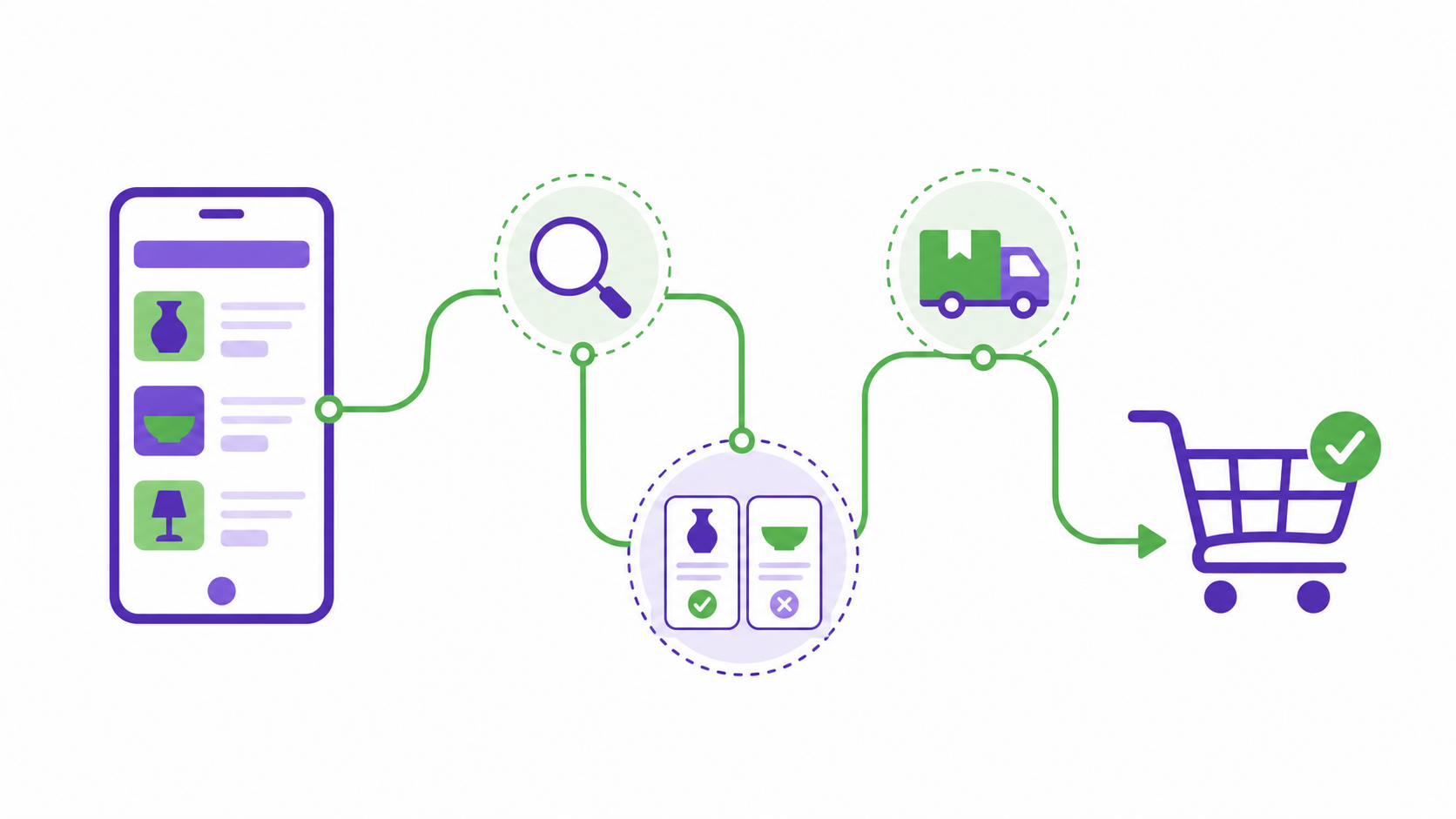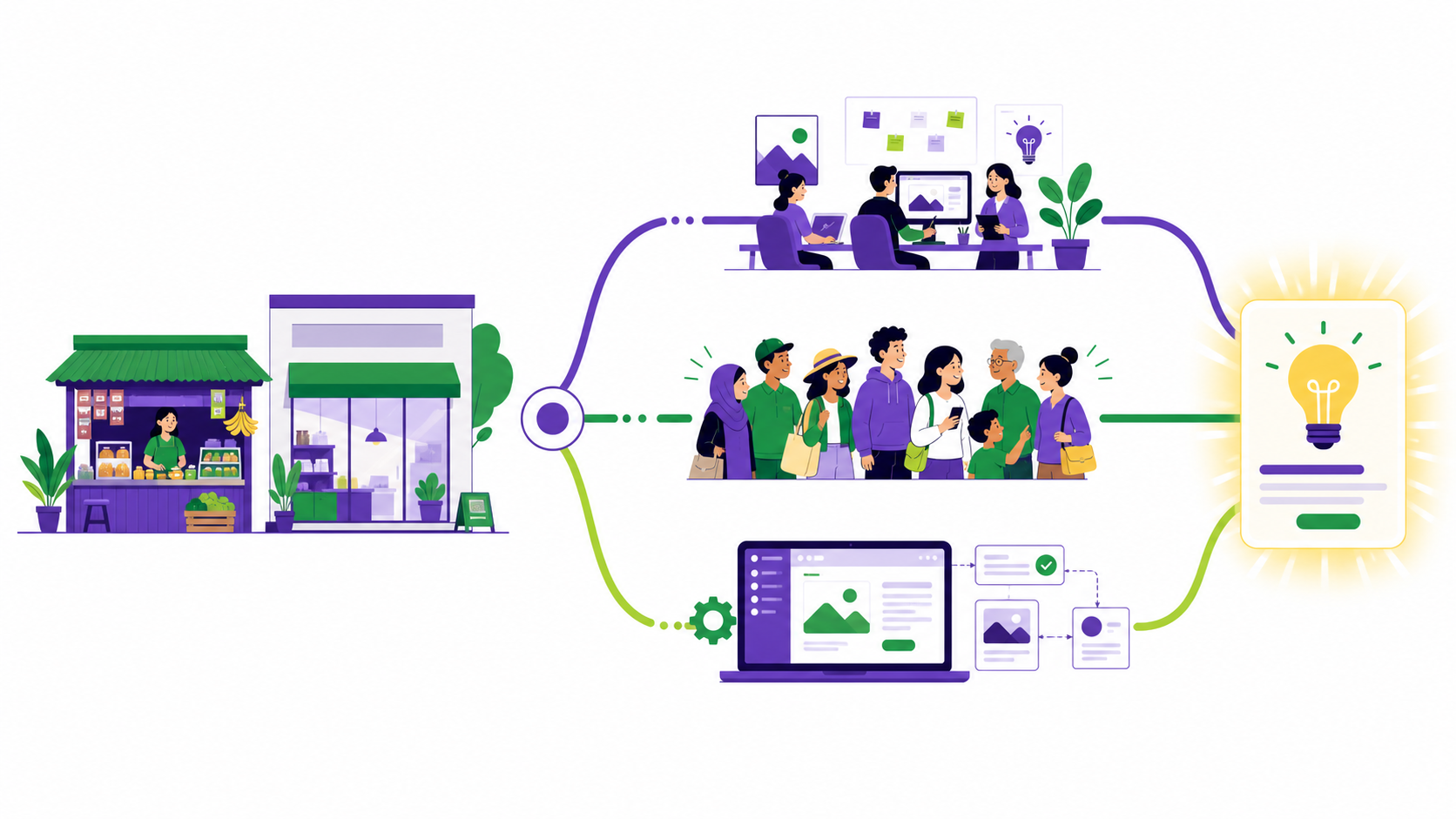

Quick answer: Concept testing companies in Indonesia fall into three types: full-service agencies that design and interpret the study for you, panel and sample providers that supply respondents for a survey you run, and research platforms that combine a panel with self-serve tools. The right type depends on how much in-house research skill you have, how fast you need a decision, and whether you test one concept or a steady pipeline. Most brand teams end up using more than one type over a year.
Why compare company types rather than company names?
Search for concept testing in Indonesia and you get a long list of names, each claiming speed, quality and local expertise. The list is less useful than it looks, because companies of the same type tend to work in similar ways. Once you know which type suits your next decision, the shortlist shrinks quickly and the remaining questions become specific.
Indonesia also adds its own complexity. Concepts often need testing in Bahasa Indonesia, the gap between Greater Jakarta and other islands matters for many categories, and the split between modern trade and traditional warung shoppers can change how a pack or price lands. Each company type handles these differently, so the comparison below focuses on how the work actually gets done.
How do the three types of concept testing company compare?
| Company type | What you get | Works best when | Watch for |
|---|---|---|---|
| Full-service agency | Study design, fieldwork, analysis and a recommendation, often with normative benchmarks | A large launch decision, a new category, or a team without research staff | Longer lead times and less flexibility to iterate between rounds |
| Panel or sample provider | Access to respondents for a questionnaire you script and analyse | You have survey software and analysts in-house | You own quality checks, translation and interpretation |
| Research platform | Panel access plus tools to build, launch and read a test, sometimes with expert support | You test often and want fast, repeatable rounds | Check how respondents are verified and how open-ended answers are handled |
Which well-known names sit in each type?
Global full-service agencies such as Kantar, Ipsos and NielsenIQ run concept and innovation testing with established methods and benchmark databases. They suit high-stakes launches where a consistent, comparable score matters to senior stakeholders.
Panel and sample providers such as Dynata and Cint supply respondents to research teams and agencies who build their own surveys. Survey software such as Qualtrics and SurveyMonkey gives you the tools to script and field a test yourself, usually paired with a sample source.
Research platforms such as Milieu Insight bring a consumer panel and self-serve tools together, so a brand team can launch a concept test without stitching suppliers together. YouGov also offers panel-based research alongside its tracking products. Each company has its own strengths, and the best choice depends on the job in front of you.
What should you ask any concept testing company about Indonesia?
Whatever type you lean towards, a short set of questions will separate the providers that understand Indonesian consumers from those that simply resell sample.
- Who are the respondents? Ask how panellists are recruited and verified, and how the provider screens out duplicate or careless answers.
- Can the sample reach beyond Greater Jakarta? For mass-market categories you may need Java outside Jakarta, Sumatra and other islands, read separately.
- How is the concept translated? Concept wording in Bahasa Indonesia should be adapted by a native speaker, not machine translated and left as is.
- How are modern and traditional trade shoppers handled? Ask whether you can set quotas or read results by main shopping channel.
- What does a result look like? Request a sample output. You want clear diagnostics on appeal, uniqueness, credibility and purchase intent, not just a top-box score.
- How quickly can you run a second round? Iteration is where most concept value is found, so the speed of round two matters as much as round one.
When does each type make most sense?
A full-service agency is a sensible choice for a flagship launch, a first entry into Indonesia, or when the board expects a benchmarked score from a familiar name. You pay in time and flexibility for a polished, defensible answer.
A panel provider plus your own survey tool suits teams with experienced researchers who want full control of the questionnaire and data. The trade-off is that your team carries the work on translation, quality control and analysis.
A research platform suits brand and innovation teams who test often, want to screen several ideas before committing budget, and value a real-time view of results. It is also a practical way to validate what earlier focus groups suggested with a quantitative read from a wider audience.
How do you build a shortlist in practice?
- Write down the decision the test must support, for example which of three flavours to launch or whether a claim is believable.
- Decide how much of the work your team can do in-house, which tells you the company type.
- Shortlist two or three providers of that type and send the same brief to each.
- Compare sample outputs and quality controls, not just headline speed.
- Run one small pilot test before committing to a longer programme.
If you are weighing providers on language and regional coverage specifically, our guide on choosing concept testing providers for Indonesia by language and region goes deeper, and what to look for in concept testing platforms covers platform features in detail.
Where does Vase.ai fit?
We build Vase.ai as a research platform: quantitative consumer surveys with a verified panel of Southeast Asian consumers, AI-validated responses and a real-time dashboard. Teams can run concept tests DIY on the platform, or with our in-house research experts, who can add survey building and a full research report.
Vase.ai is built for brand and innovation teams that test concepts often and want fast, repeatable quantitative reads. Global agencies such as Kantar and Ipsos remain a strong choice for benchmarked flagship studies, and qualitative partners suit deep exploratory work. We do our best work when you need to compare ideas quickly and move to a decision with confidence.
Frequently asked questions
Is a concept test in Indonesia different from one in Malaysia or Singapore?
Yes. Language, the weight of traditional trade, regional differences across islands and religious and cultural cues all affect how a concept is read, so the questionnaire and sample design need local adaptation rather than a copy of another market's test.
Can I test several concepts in one survey?
Usually, yes. A monadic design shows each respondent one concept, which gives the cleanest read, while sequential monadic designs show several concepts in rotated order and are more efficient. Your provider should explain the trade-off for your case.
Do I need focus groups before a quantitative concept test?
Not always. Focus groups help shape early ideas and wording. A quantitative test then tells you how widely the appeal holds across your target audience, which is the evidence most launch decisions need.