
Quick answer: AI market research platforms use automation to speed up survey design, fieldwork checks, analysis and reporting, so insights teams spend less time on admin and more on decisions. The best ones keep real consumer responses at the centre and use AI to validate and summarise them, not to invent them. We build Vase.ai, so we are biased, but we explain below what to ask any vendor and where another route is smarter.
What does AI do inside a market research platform?
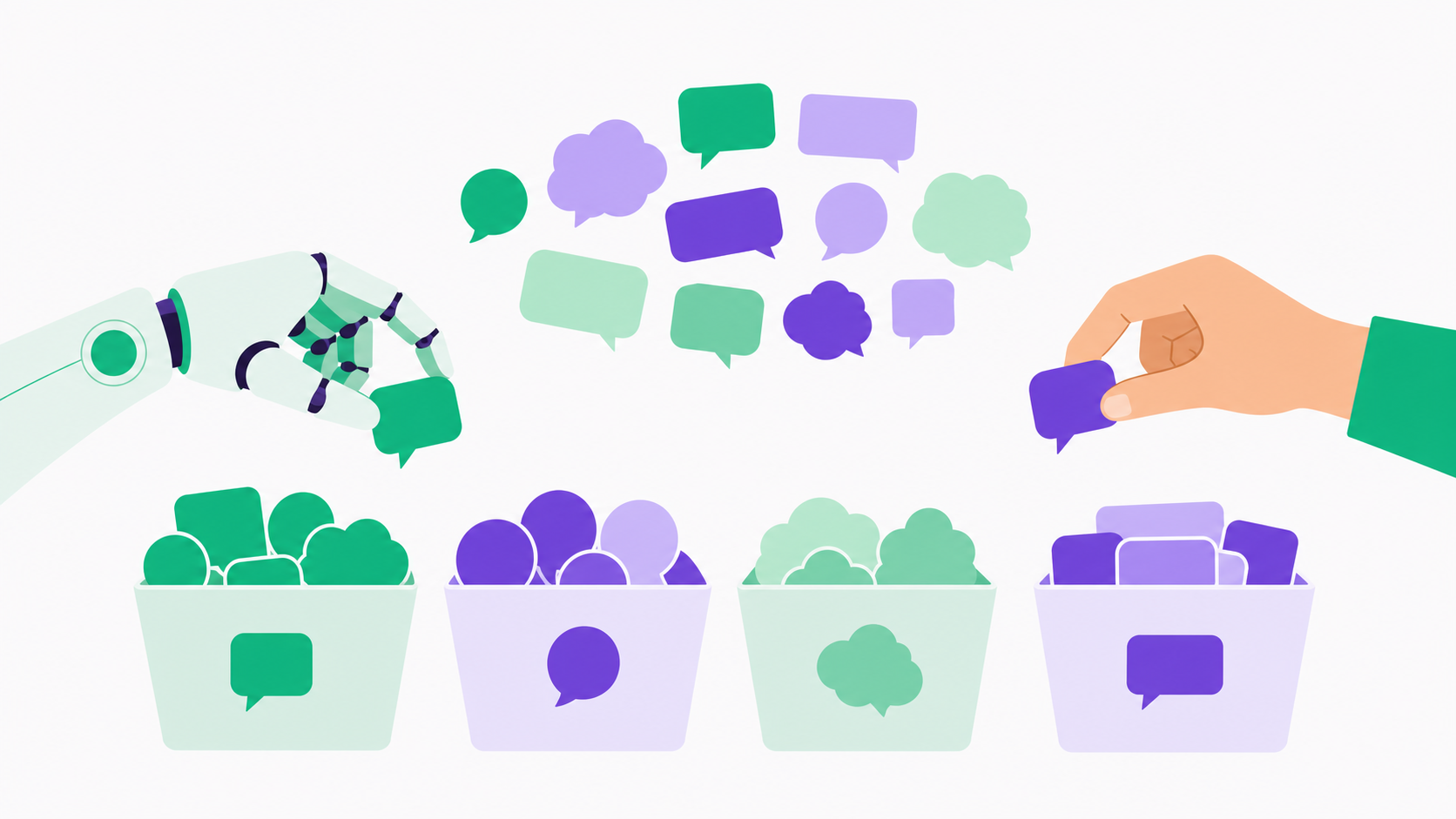
Most so-called AI features fall into four jobs. The first is design help, such as drafting questionnaires or suggesting question order. The second is fieldwork quality, such as spotting speeders, duplicates and inconsistent answers. The third is analysis, such as coding open-ended answers into themes. The fourth is reporting, such as turning results into summaries and charts.
None of these replace the consumer. They reduce the manual work around the consumer's answers. That distinction is the first filter to apply when a vendor says its platform is AI-powered.
How is this different from our other AI research guides?
We have already compared tools in AI market research platforms for brand teams and listed the best AI market research platforms for consumer brands. This article takes the insights team's view instead. It asks where AI belongs in a consumer insights workflow, and what an insights lead should demand before trusting an AI-generated finding.
Where does AI help consumer insights teams most?
The biggest gains sit in repetitive work. Cleaning data, coding open ends and building first-draft reports are slow when done by hand and are well suited to automation. A team that used to wait for a vendor to code verbatims can now see themes as responses arrive.
AI also helps at the front of a project. A brief that once took several rounds to turn into a questionnaire can be drafted faster, then reviewed by a researcher. The human still decides what to ask and how to read the answer.
Where should insights teams be careful?
Be careful whenever AI output looks more certain than the data allows. A fluent summary of a small or biased sample is still a weak finding. Ask whether the tool shows the underlying responses, the sample size and the method, so that you can check the claim yourself.
Be equally careful with synthetic or simulated respondents. They can be useful for early idea sparring, but they are not a substitute for verified consumers when you are making a launch or pricing decision. If a vendor blends the two, ask for them to be clearly labelled.
How do the main approaches compare?
Different providers use AI in different places. Use this table to decide which approach matches the way your team works. Check current features and coverage with each provider, as these change quickly.
| Approach | Typical examples | Good for | Trade-off |
|---|---|---|---|
| AI-assisted survey platform with a verified panel | Vase.ai | Fast consumer studies in SEA with automated quality checks | Focused on survey-led research rather than every method |
| Large survey and experience suites | Qualtrics | Research-trained teams that want deep configuration | More setup and skill needed to get value |
| Global full-service research firms | Ipsos, Kantar, NielsenIQ | Complex multi-market programmes with expert teams | Heavier process and commitment |
| Panel and data providers | YouGov, GWI, Dynata, Cint | Sample access and broad consumer data | Analysis and design often sit with you |
| Regional insights platforms | Milieu Insight | In-region surveys and local expertise | Confirm fit for your method and markets |
What should you ask an AI research vendor?
Ask five things. Who are the respondents and how are they verified? What does the AI do, and what does a researcher still do? Can I see raw responses behind every insight? How are open-ended answers coded, and can I edit the themes? What happens to my data?
A confident vendor answers these plainly. A vague answer is itself useful information. For a practical shortlist process, our guide on how to choose a market research platform covers the buying steps.
How should an insights team pilot an AI platform?
Pick one live question and run it on the platform alongside your usual method. Compare the time taken, the quality of the open-ended coding and how easy it was to explain the result to a non-researcher. A pilot on a real decision tells you far more than a demo built on sample data.
Set the success test before you start. For example, decide that the pilot passes if the platform reaches the same conclusion as your usual route, in less working time, with data your team could defend if challenged. If it fails that test, you have learned something cheaply.
Involve the people who will use the output. A platform that delights researchers but confuses brand managers will not change how decisions get made.
What does good AI-assisted reporting look like?
Good reporting answers the business question first, then shows the evidence. It should let you click from a headline to the underlying chart and the verbatim comments behind it. It should also say how many people answered and who they were, so that readers can judge the strength of the claim.
Be cautious of reports that read beautifully but hide the method. A summary is only as good as the sample and the questions behind it, and an insights lead should be able to explain both in a sentence or two.
Where does Vase.ai fit?
If you have a consumer question, a deadline and no appetite for a long agency process, send us your brief or your research question. We will suggest a study design and a sample, and tell you whether it makes sense to run it on Vase.ai yourself or with our research experts.
If your question is better served by a syndicated data source or a global tracking programme, we will say so.
Frequently asked questions
What is an AI market research platform?
It is a research platform that uses automation and machine learning to help with tasks such as questionnaire drafting, fraud and quality checks, open-ended coding and reporting, while real consumers still provide the underlying responses.
Can AI replace consumer surveys?
Not for decisions that carry real commercial risk. AI can speed up the work around a survey, but verified human responses remain the evidence you should trust for launches, pricing and positioning.
How do I know an AI-generated insight is reliable?
Check that you can see the sample, the method and the raw responses behind it. A reliable insight can be traced back to data, and a researcher can challenge it.